

The Opening the Door project was completed in 2025.
The project aimed to support people with disability to achieve choice and control with their housing options. The project is for all people with disability, regardless of their type of disability or age, and whether they are a participant in the NDIS or not.
The following resources may assist your housing journey.
Project funding was through the Australian Government’s Information, Linkages & Capacity Building program.
Please contact R&IA with any queries: contact@riaustralia.org
Resources
Below, you will find a range of general resources that may assist you with your housing journey.
Further down the page you will also find information and resources from the ‘Lunchtime Conversation’ forums that we held. These are on more focused topics; for example: Decision-making; Home Rental; Special Disability Trusts; and SDA Self-provision.
Everyone needs a home that is secure, affordable, accessible, and well-located. For people with disability, having a home that meets these needs is just as important.
The My Housing Matters workbook is a free resource that can help you on your housing journey. It will help you:
- Picture the home you want
- Learn about different housing options
- Prepare for your next steps.
You can download it in two formats:
- Standard version (PDF) - this is best for printing and general use
My Housing Matters workbook - Standard Version (PDF)
- Screen Reader version (Microsoft Word) - this is an editable version for people using a screen reader. The content formatting may change when opened. Navigation tips are provided on page 23 of the workbook.
My Housing Matters workbook - Screen Reader version (Word)
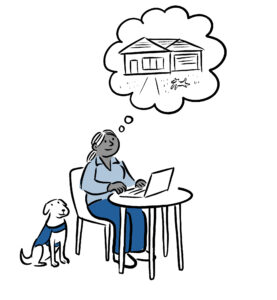
R&IA has published this updated edition of the ‘My Housing Matters’ workbook under licence from Queenslanders with Disability Network (QDN), as part of the Opening the Door project. Copyright details regarding the text and images are provided on page 2 of the workbook.
In addition to the content on this page, there is a broad range of information available online about home and living.
Housing Hub
The Housing Hub advertises disability friendly homes and apartments across Australia. The resources section has information to help you plan your move.
- Housing Hub website
- Housing Hub resources for housing seekers (webpage)
- NDIS Housing Advice Line (webpage) (free phone advice line; Mon-Fri 10am-4pm (Sydney time)
- Home and Living Support Coordination Service (webpage).
National Alliance of Capacity Building Organisations (NACBO)
- My Home, My Way website - 'Resources to assist people with a disability to thrive in their own home'
- My Home, My Way podcast (website)
- ILO Toolkit: Individualised Living Options (website).
Western Australia's Individualised Services (WAiS)
- WAiS website
- WAiS Mythbusters video series (webpage)
- Creating Home: Individualised Living (webpage) (links to My Home: Individualised Living website)
- My Home: Individualised Living (website).
NDIS
If you are an NDIS participant, generally refer to NDIS/ For Participants/ Home and Living (webpage).
The following NDIS webpages may also assist:
- Assistive technology explained
- Home and living supporting evidence form
- Support budgets in your plan
- Home modifications explained
- Individualised living options
- Supported Independent Living (SIL) for participants
- Short Term Respite
- Medium term accommodation
- Specialist Disability Accommodation (SDA) explained
- SDA vacancy finder
- Guide to residential aged care.
When people rent a house, they generally have a tenancy agreement with their landlord (the owner of the house). This includes when you rent social housing.
The property can be managed by the landlord directly, or managed on behalf of the landlord by a property manager (e.g. real estate agent).
Below, we have provided information for when your housing issues relates directly to residential tenancy law. There can also be an overlap with advocacy and discrimination law for people renting homes. For general advocacy and discrimination assistance refer to the ‘Resources - Advocacy & Other Legal’ tab below.
Tenants' Unions/ Tenant Advice Services
National Association of Renters' Organisations (NARO)
The National Association of Renters' Organisations (NARO) is a federation of State and Territory-based Tenants’ Unions and Tenant Advice Services across Australia. Click on the links for your state or territory:
- Tenants Queensland
- Tenants’ Union of New South Wales
- Tenants’ Union of Tasmania
- Tenants Victoria
- Tenancy WA (Circle Green)
- Darwin Community Legal Service - Tenants' Advice Service (NT)
Some of these the NARO organisations have staff employed to work specifically with people with disability; if not, they will be able to direct you to other services that can help.
Other states and territories
In the ACT, check the Tenancy Advice Service ACT (division of Legal Aid ACT).
In South Australia, check RentRight SA (service of SYC).
Also in NSW, check the Disability Housing Advocacy Service (service of People with Disability Australia).
Housing Hub
Check the resources at Solving Problems in NDIS Housing (webpage) There are 13 different resources here, including about roles and responsibilities, shared support, service agreements, and building a culture of open feedback.
Building Tenancy Skills (WA)
(Project managers: Shelter WA & People With disability WA)
The Building Tenancy Skills project , finished in 2024, has a valuable range of resources that can assist you to maintain your tenancy, whether you live in WA or elsewhere.
The project's Renting with Confidence resources include video and factsheets covering:
- Communication
- Getting behind in your rent
- Preparing for a rent inspection
- NDIS and renting
Different rental arrangements (e.g. boarding, homeshare, congregate dwellings)
Residential tenancy laws differ in each state and territory. This includes for people who are boarding, sharing homes, living in caravans, and for people living in group settings - along with other living arrangements.
To find out more about how your rights are protected, check with the government rental guides and tenancy advisory services to your state or territory.
State and Territory Resources & Links
Refer also to Tenants' Unions/ Tenant Advice Services information above.
ACT - Resources & Links [Sub-sub-heading]
- ACT Residential Tenancies Act (webpage)
- Tenancy Advice Service ACT (webpage)
- Guidance: Rental laws in the ACT – ACT Government (webpage)
- ACT Law Handbook (webpage)
- Canberra Community Law (website)
- Canberra Community Law - Housing Law Service (webpage)
- Canberra Community Law - Housing Law resources (webpage)
- Care Financial Counselling Service (website)
NSW - Resources & Links
- Residential Tenancies Act 2010 No 42 (webpage)
- Renting a place to live | NSW Fair Trading (webpage; includes Rent Check)
- Tenants' Union of NSW (website)
- Tenants' Union of NSW – Starting a Tenancy (webpage; includes fact sheets)
- Tenants’ Rights Information Resources | Tenants' Union of NSW (webpage; includes factsheets, etc.)
- Tenants Advice & Advocacy Services – Search tool | Tenants' Union of NSW (webpage)
- Aboriginal Tenants Advice & Advocacy Services – Search tool | Tenants' Union of NSW (webpage)
Northern Territory - Resources & Links
- Residential Tenancies Act 1999 (webpage)
- Renting in the NT: Changes to the Residential Tenancies Act 1999 - NT Consumer Affairs (webpage) (2024)
- A Guide to Renting in the Northern Territory - NT Consumer Affairs (PDF)
- Darwin Community Legal Service - Tenants' Advice Service (webpage)
- Tenancy Factsheets - Darwin Community Legal Service (webpage; includes videos)
Queensland - Resources & Links
- Residential Tenancies and Rooming Accommodation Act 2008 (webpage)
- Tenants Queensland (website)
- Residential Tenancies Authority | Queensland Government (website)
- Resources - Residential Tenancies Authority | Queensland Government (webpage)
- Pocket guide for tenants - house and units (Form 17a) - Residential Tenancies Authority | Queensland Government (webpage, with downloads)
South Australia - Resources & Links
- Residential Tenancies Act 1995 (webpage)
- RentRight SA - Housing Advice and Advocacy Service (webpage)
- Renting - SA Government (webpage)
- Renting & Letting Advice - Consumer and Business Services | SA Government (webpage)
- Review of SA’s renting laws - Consumer and Business Services | SA Government (webpage)
Tasmania - Resources & Links
- Residential Tenancy Act 1997 (webpage)
- Tenants' Union of Tasmania (website)
- The Rental Guide - Consumer, Building & Occupational Services | Tasmania Government (PDF)
- Advocacy and support using MyBond - Consumer, Building & Occupational Services | Tasmania Government (webpage)
Victoria - Resources & Links
- Residential Tenancies Act 1997 (webpage)
- Tenants Victoria (website)
- Commissioner for Residential Tenancies (website)
- Renting - Consumer Affairs Victoria (webpage)
- Protecting the Rights of Tenants in Disability Accommodation Settings - Villamanta Disability Rights Legal Service (PDF) (Dec 2023)
- Specialist Disability Accommodation - Consumer Affairs Victoria (webpage)
Western Australia - Resources & Links
- Residential Tenancies Act 1987 (webpage)
- Tenancy support services - Consumer Protection | WA Government (webpage)
- Circle Green Community Legal - Tenancy Services (statewide) (webpage)
- Renting a home - Consumer Protection | WA Government (webpage)
- Tenant guide: renting a home in WA - Consumer Protection | WA Government (webpage)
- Videos on Renting - Consumer Protection | WA Government (webpage; includes videos)
- Building Tenancy Skills project: Building capacity to maintain tenancies - Shelter WA and PWdWA (webpage)
- Building Tenancy Skills project - Renting with Confidence Resources - Shelter WA and PWdWA (webpage; includes videos and documents
Below you will find information regarding general advocacy and legislation, including discrimination law. For tenancy law and rental issues, refer to the Resources Renting & Tenancy Issues tab above.
Disability Advocacy Network Australia (DANA)
DANA is the national representative body for a network of independent disability advocacy organisations throughout Australia. It also coordinates services between a number of key Disability Representative Organisations (DROs) that engage in systematic advocacy on behalf of people with disability.
DANA's 'Find an Advocate' webpage can help you to find a disability advocacy organisation in your state or territory.
National Shelter
National Shelter is Australia's non-government peak organisation that aims to improve housing access, affordability, appropriateness, safety and security for people on low incomes. National Shelter is also a partner in the Opening the Door project.
At the National Shelter Members webpage you can find details for state and territory Shelter organisations.
National Shelter's work includes the annual publication of the national Rental Affordability Index (RAI) with SGS Economics & Planning, and Housing All Australians. The RAI is a price index for Australia's housing rental markets, and is a clear and concise indicator of rental affordability relative to household incomes.
Homelessness Australia
Homelessness Australia is the national peak body for homelessness. It provides systemic advocacy for the homelessness sector.
Australian Network for Universal Housing Design (ANUHD)
ANUHD is a key network advocating for minimum standards of accessibility for all new housing in Australia. You can find out more about ANUHD's ongoing advocacy here.
ANUHD’s website includes examples of universal design in housing.
Legislation
National Legislation
National legislation can be accessed at the Federal Register of Legislation website.
Key Commonwealth legislation that may be of interest:
- Disability (Access to Premises — Buildings) Standards 2010 (Note: this does not apply to all housing)
- Disability Discrimination Act 1992
- Disability Services and Inclusion Act 2023
- National Disability Insurance Scheme Act 2013 (NDIS Act)
State and Territory legislation
ACT - Resources & Links
- ACT Legislation Register (website)
- Legislation - Discrimination Act 1991 (webpage)
- Legislation - Human Rights Commission Act 2005 (webpage)
- Legislation - Disability Services Act 1991 (webpage)
- ACT Human Rights Commission (webpage)
- ACT Disability and Community Services Commissioner - ACT Human Rights Commission (webpage)
- Community Legal Centres (webpage)
- Advocacy for Inclusion (peak DRO) (website)
- Advocacy for Inclusion - Resources (webpage)
NSW - Resources & Links
- NSW Legislation Register (website)
- Legislation - Ageing and Disability Commissioner Act 2019 No 7 (webpage)
- Legislation - Anti-Discrimination Act 1977 No 48 (webpage)
- Legislation - Disability Inclusion Act 2014 No 41 (webpage)
- Anti-Discrimination New South Wales (website)
- Community Legal Centres NSW (website; includes search directory)
- Advocacy Law Alliance (website; provides details for several legal services)
- Australian Centre for Disability Law (website)
Northern Territory - Resources & Links
- NT Legislation Register (website)
- Legislation - Disability Services Act 1993 (webpage)
- Legislation - Anti-Discrimination Act 1992 (webpage)
- Northern Territory Anti-Discrimination Commission (website)
- Disability Advocacy (webpage; provides details for advocacy service providers)
- Get Legal Advice in the NT (webpage; provides directory)
Queensland - Resources & Links
- Queensland Legislation Register (website)
- Legislation - Disability Services Act 2006 (webpage)
- Legislation - Human Rights Act 2019 (webpage)
- Queensland Human Rights Commission (website)
- Community Legal Centres Queensland (website; services directory)
- Queensland Advocacy for Inclusion (website)
South Australia - Resources & Links
- South Australian Legislation Register (website)
- Legislation - Disability Inclusion Act 2018 (webpage)
- Legislation - Disability Services Act 1993 (webpage; act due to be repealed)
- Legislation - Equal Opportunity Act 1984 (webpage)
- Legislation - South Australian Public Health Act 2011
- Equal Opportunity SA (website)
- Community Legal Centres South Australia (website)
Tasmania - Resources & Links
- Tasmanian Legislation Register (website)
- Legislation - Disability Rights, Inclusion and Safeguarding Act 2024 (webpage)
- Legislation - Anti-Discrimination Act 1998 (webpage)
- Office of the Anti-Discrimination Commissioner (website)
- Disability Commissioner Tasmania (webpage)
- Community Legal Centres Tasmania (website)
Victoria - Resources & Links
- Victorian Legislation Register (website)
- Legislation - Disability Act 2006 (webpage)
- Legislation - Disability Service Safeguards Act 2018 (webpage)
- Legislation - Equal Opportunity Act 2010 (webpage)
- Legislation - Public Health and Wellbeing Act 2008 (webpage)
- Victorian Equal Opportunity & Human Rights Commission (website)
- Disability Rights - Victorian Equal Opportunity & Human Rights Commission (webpage)
- Federation of Community Legal Centres Vic. (website)
- Villamanta Disability Rights Legal Service (website)
Western Australia - Resources & Links
- Western Australian Legislation Register (website)
- Legislation - Disability Services Act 1993 (webpage)
- Legislation - Equal Opportunity Act 1984 (webpage)
- Legislation - Public Health Act 2016 (webpage)
- Equal Opportunity Commission (webpage)
- Community Legal Western Australia (website; peak body)
- Sussex Street Community Law Services - Disability Discrimination Unit (website)
UN Convention on the Rights of Persons with Disability
The United Nations Convention on the Rights of Persons with Disability (CRPD) is the key international convention that guides much of Australia's national, state and territory legislation. This is referenced in the Australian Human Rights Commission Act 1986.
You can view the CRPD, including Easy Read versions here.
ABCB Livable Housing Design Standard
The Livable Housing Design Standard is referenced to the National Construction Code 2022 (NCC). This Standard is being adopted in all states and territories other than NSW and Western Australia, with allowance for some exemptions.
In general, the provisions of this Standard are designed for application to Class 1a buildings (houses and the like) and Class 2 sole-occupancy units (apartments), as defined in the NCC.
You can see the Livable Housing Design Standard (PDF) here , and the voluntary 'gold' level Standard (PDF) here.
Parliament of Australia
Joint Standing Committee on NDIS (webpage)
Senate Standing Committees on Community Affairs (webpage)
Disability Royal Commission
Disability Royal Commission (website)
Disability Royal Commission - Final Report (webpage) (published September 2023)
NDIS Review
NDIS Review (website)
NDIS Review - Final Report (webpage) (published October 2023)
Australian Government
Department of Health, Disability and Ageing
About the Department / News (webpage)
Disability and carers (webpage; information on support)
Disability and carer resources (webpage)
Department of Social Services (DSS)
National Disability Insurance Scheme (NDIS)
NDIS Website
NDIS / For Participants (webpage)
NDIS / Home and Living (webpage)
Australian Housing and Urban Research Institute (AHURI)
AHURI’s primary purpose is the delivery of high-quality, peer reviewed primary research across housing, homelessness, cities and urban policy arenas; disseminating findings to government, industry and the community.
Australian Institute of Health and Welfare (AIHW)
The AIHW is an independent statutory Australian Government agency working with health and welfare data.
Centre for Disability Research and Policy (CDRP) – University of Sydney
The Centre for Disability Research and Policy (CDRP) aims to reduce the disadvantage that occurs for people with disability. Their research works to improve the social and economic participation, health and wellbeing of people with disability.
Centre of Excellence in Population Ageing Research (CEPAR)
An Australian Research Council Centre, CEPAR's research is aimed at providing innovative global solutions to the economic and social challenges of population ageing.
Centre for Research Excellence in Disability and Health (CRE-DH)
The Centre of Research Excellence in Disability and Health (CRE-DH) aims to identify cost-effective policies that improve the health of people with disability in Australia.
Disability Innovation Institute (DII) – UNSW
Disability Innovation Institute webpage
An initiative to support interdisciplinary disability research, uniquely combining disability studies with STEM, arts and humanities research applied to disability innovation.
Living with Disability Research Centre – La Trobe University
Living with Disability Research Centre website
The Living with Disability Research Centre is a leading Research Centre for social research into the lives and experiences of people living with cognitive disability in Australia.
Melbourne Disability Institute – University of Melbourne
Melbourne Disability Institute website
The Melbourne Disability Institute facilitates collaborative, interdisciplinary research at the University of Melbourne. This includes through several Disability Research Hubs:
National Disability Research Partnership
The National Disability Research Partnership funds research led by and with people with disability.
Research in Disability and Community Inclusion (RDCI) – Flinders University
RDCI website (Part of Flinders University’s Caring Futures Institute)
The RDCI focuses on research, training, and advocacy to promote the rights and inclusion of people with disabilities. It partners with people with disability, community organisations and government agencies to address issues such as accessibility, social justice, and empowerment.
Lunchtime Conversations – Videos & Resources
As part of the Opening the Door project, we hosted online forums to assist people with disability on a range of housing issues. This included the ‘Lunchtime Conversation’ series. Information and resources from the ‘Lunchtime Conversation’ forums are provided below.
How we make decisions is so important to how we live our day-to-day lives, as well as big life changes – such as moving home. Below, you will find a range of resources on decision-making, and supports to help with decision-making.
Lunchtime Conversation #005
Lunchtime Conversation #005 was held on 1 February 2024, with a specific focus on decision-making.
The video from Dr Michelle Browning's presentation can be viewed below. In this video, Michelle explores the value of using the supported decision-making approach guided by important principles and a structured process.
Duration: 25 min
(Video – © RI Australia Network t/as Rights & Inclusion Australia 2025; incorporates content from the 'Mythbusters' video series – © Western Australian Individualised Services 2025)
Resources
Forum Resources
Lunchtime Conversation #005 - Information Sheet (Feb 2024) (MS WORD)
Belonging Matters - Circles of Support Resource List (Feb 2022) (MS WORD)
Resources - National Alliance of Capacity Building Organisations (NACBO)
National Alliance of Capacity Building Organisations (NACBO) - Home page ~ Info and Contacts (website)
NACBO - My Home, My Way: Resources to assist people with a disability to thrive in their own home (website)
NACBO - My Home, My Way Resource List (Sept 2021) (PDF)
NACBO - ILO Mentor & Navigator brochure (Aug 2021) (PDF)
NACBO - Using Funding Creatively (Sept 2021) (PDF)
Links – Decision Making (External)
Belonging Matters - Decision Making Resources (webpage)
Decision Agency - Home Page (webpage)
Decision Agency - eLearning Modules (webpage)
Decision Agency - Video Resources (webpage)
WAiS Mythbuster videos (webpage)
WAiS Supported Decision Making (webpage)
Links – Circles of Support (External)
Belonging Matters - Circles of Support ('Talks that Matter' videos) (webpage)
National Alliance of Capacity Building Organisations (NACBO) info and contacts (website)
National Resource Centre for Circles of Support and Microboards - NRCCOSAM (website)
Home modifications are done to make homes easier to access for people living there. Ideally, they are tailored to an individual's needs. Below, you will find resources and links to assist you with home modifications.
Home modifications can be complex, so it's crucial for people receiving them to have as much information as possible about:
• What home modifications are
• What to expect during the process
• How to recognise whether a modification has been done properly or not.
What we have heard
Through the Opening the Door project we have heard of several key issues with home modifications:
• Difficulty of getting modifications in private rental properties - landlords and the NDIS are reluctant to fund.
• Unwillingness of NDIA to fund modifications in public housing.
• Problems with managing construction work, such as complex home modifications.
• People receiving NDIS support are often charged higher prices for modifications compared to those who don't receive NDIS support.
• The work is not being completed satisfactorily or in line with the agreed-upon design and scope.
Resources
Forum Resources
The following resources were developed for the Home Modifications forum. No video is available:
• Lunchtime Conversation #003 - Information Sheet (Sep 2023) (WORD DOC)
• Lunchtime Conversation #003 - PowerPoint Presentation (June 2023) (POWER POINT)
• Lunchtime Conversation #003 - Video-Transcript (June 2023)
• Nick Schumi's Home Mods Story (Aug 2023) (WORD DOC) - Nick shared his journey with getting home modifications for R&IA's submission to the NDIS Review (submitted August 2023).
Home Modification Clearinghouse (HMinfo)
MHinfo (website) offers a broad range of resources to support Home Modification service providers and researchers, as well as older people, people with disability, and their carers. These resources include research publications and technical publications, by HMinfo and others, as well as research data, guides, and practical tools.
Click here to access all HMinfo resources (webpage).
HMinfo Consumer Factsheets translate research evidence for home modification design and building practices into concise information for consumers. Click here to access their consumer factsheets (webpage).
NDIS
The NDIS’s ‘What are home modifications’ (webpage) provides information for those NDIS participants who might be eligible for funding of modifications.
Housing Hub
The Housing Hub's guide 'Home Modifications: Making your home right for you' (webpage). The guide can help you work out what home modifications you may need, and how to get funding for them.
Home Modifications Australia (MOD.A)
MOD.A is the national peak industry body representing home modification providers for people with disability and the aged. MOD.A provides links to a range of public resources. Click Here.
There are many things to consider when getting prepared for renting a house.
In Lunchtime Conversation #006, held on 7 March 2024, we talked about renting options in the mainstream private rental market - how to find and apply for a new rental home, how to get home modifications, and other issues that you might have.
While having some focus on the private rental market, much of this is also relevant to renting public or community housing. Videos from the forum are provided below.
In the ‘Resources - Renting & Tenancy Issues’ section above, you can find further information for each state and territory. This includes links to tenant advisory services, rental legislation, and guidance notes.
The separate Lunchtime Conversation #008 focused on sharing homes. You can find out more in the ‘Sharing Homes’ tab below.
Lunchtime Conversation #006
There were two parts to the Lunchtime Conversation #006 forum:
Part 1: Getting Ready to Rent
- Decision-making, including identification of where and with whom to live
- Readying to rent - things that you need to consider, including budgeting
- Support from NDIS and others.
Part 2: Residential Tenancy Law
- Responsibilities of the landlord (including provision of home modifications; pets)
- Responsibilities of the tenant
- Extending a lease / Breaking a lease
- Advocacy support with issues.
Presenters:
- Sallyanne Kelly - Tenancy Manager, CHC (Community housing provider, ACT)
- Donna Turner & Wendy Wright - Building Tenancy Skills project (Shelter WA & PWdWA)
- Allison Sampson - Money Mentors (Financial counsellors, WA)
- Leo Patterson Ross - Tenants' Union of NSW
Facilitator: Emma Greehalgh, National Shelter
LC#006 – Private Home Rental (full forum recording)
This is the full forum video. Below, you can also view shorter videos of the individual presentations.
Duration: 1hr 43 min
LC#006 – Sallyanne Kelly: Getting Ready to Rent
In this video, Sally talks us through the initial aspects of getting ready to rent.
Duration: 12 min
LC#006 – Allison Sampson: Financial Considerations
In this video, Allison talks us through different financial things that you should consider when getting ready to rent.
Duration: 14 min
LC#006 – Wendy Wright: Personal Experiences with Private Home Rental
In this video, Wendy shares her personal experiences of renting housing and provides useful tips for others.
Duration: 10 min
LC#006 – Donna Turner: Maintaining a Rental Tenancy
In this video, Donna talks about renting with reference to the ‘Building Tenancy Skills’ project that she managed in WA.
Duration: 13 min
LC#006 – Leo Patterson Ross: Residential Tenancy Law – Factors to Consider
In this video, Leo talks about tenancy law for people with disability who are renting in the private home rental market.
Duration: 31 min
(All Videos – © Rights & Inclusion Australia 2025)
Lunchtime Conversation #008, held on 21 March 2024, was intended to help people think about shared living arrangements, especially with people other than close relatives. Videos from the forum are provided below.
The separate Lunchtime Conversation #006 focused on home rental. You can find out more in the ‘Home Rental’ tab above.
In the ‘Resources - Renting & Tenancy Issues’ section above, you can find further information for each state and territory. This includes links to tenant advisory services, rental legislation, and guidance notes.
Lunchtime Conversation #008
There were three parts to the Lunchtime Conversation #008 forum:
Part 1: Tenancy Law
- How it applies to sharing homes
- Your rights when you share with others in private rental, SDA, and other housing
- What happens if things go wrong?
Part 2: Finding people to share with
- The Homeshare Approach, as a way of finding safe, supportive, and home-like environments.
- Reflections from delivery of a Homeshare program.
Part 3: Sharing homes with other people with disability
- Learnings from the Housing Hub and Summer Foundation’s ‘Reimagining Shared Housing and Living’ project.
Presenters:
- Leo Patterson Ross - Tenants’ Union of NSW [URL: https://www.tenants.org.au/]
- Wendy Francis and Ashlee Pitcher - Homeshare Australia and New Zealand Alliance (HANZA)
- Lee Harrison - Community Connections (ACT)
- Alecia Rathbone - The Housing Hub
Facilitator: Emma Greehalgh, National Shelter
LC#008 – Sharing Homes (full forum recording)
Duration: 1hr 35 min
LC#008 – Leo Patterson Ross: Tenancy Law - Sharing Homes
In this video, Leo discusses how tenancy law applies to living in shared homes.
Duration: 24 min
LC#008 – Ashlee Pitcher, Wendy Francis & Lee Harrison: Finding People to Share with - the Homeshare Approach
In this video, we learn about the Homeshare approach to finding people to share with. Ashlee and Wendy provide a detailed overview of Homeshare. They are then joined by Lee, who provides several case studies from his work in the ACT.
Duration: 30 min
LC#008 – Alecia Rathbone: Sharing Homes with other People with Disability
In this video, Alecia talks about sharing homes with reference to the Housing Hub's project called ‘Reimagining shared housing and living’. The project focuses on housing for people with disability who have a preference to live with other people with disability.
Duration: 12 min
(All Videos – © Rights & Inclusion Australia 2025)
A 'Shared Support Collective' empowers NDIS participants to have more choice and control in the support services that they use, sharing these services with others. This model has been developed by Enliven Community through a pilot project that ran from 2022 until 2024.
With guidance from a Shared Support Facilitator, participants can work together as a Collective to make decisions about who delivers their supports, and how to ensure it meets their needs and preferences.
While the role of Shared Support Facilitator is not currently funded by the NDIS, Enliven Community continues to seek for this to be included in the NDIS price guide.
Lunchtime Conversation #013
Lunchtime Conversation #013, held on 29 October 2024, focused on the opportunities provided through a Shared Support Collective approach.
This video, a full recording of the forum, provides details of the approach and further discussion.
Presenters
• Bramble Heinrich-McPartlan - Enliven Community
• Brittany Pantano - Enliven Community
• Michelle Haddon – Possability Lifestyle Solutions
Presenter/ Facilitator
• Jessica Cramp - Enliven Community
Duration: 1hr 31 min
(Video – © Rights & Inclusion Australia 2025)
Resources
The following 'Shared Support Collective' resources were developed by Enliven Community. Please feel free to use and share with others.
• Shared Support Collective - SSC_Member-Guidebook
• Shared Support Collective - SSC_Shared-Support-Facilitator-Guidebook
• Shared Support Collective - SSC_Resource-Toolkit
• Shared Support Collective - SSC_Collective-Dignity-Guidebook
The video below provides a brief introduction about these resources.
Duration: 5 min
Want to know more?
You can find out further information on Enliven Community's Pilot Project here.
Please email enquiries to hello@enlivencommunity.org.au or phone 1300 210 220

Lunchtime Conversation #007, held on 21 March 2024, focused on individualised living arrangements for people with disability. This includes through NDIS-funded Individualised Living Options. Videos from the forum are provided below.
Magdalena Garcia Flynn and Karen Reid presented on behalf of the Empowered Connections program of Valued Lives , in Western Australia. NDIA staff also gave presentations, but these were not filmed for publication.
You can find out more about NDIS-funded Individualised Living Options here.
Lunchtime Conversation #007
LC#007 – Magdalena Garcia Flynn: Individualised Living Arrangements – NDIS Individualised Living Options
In this video, Magdalena provides a brief overview of Individualised Living Arrangements, of which Individualised Living Options (ILOs) are one part.
Duration: 12 min
LC#007 – Magdalena Garcia Flynn: ILO Toolkit – NDIS Individualised Living Options
In this video, Magdalena provides a detailed overview of the ILO Toolkit that has been developed to assist people with their NDIS ILO design and funding applications.
You can access the ILO Toolkit here.
The ILO Toolkit was developed by the National Alliance of Capacity Building Organisations (NACBO).
Duration: 9 min
LC#007 – Karen Reid: Caragh’s Journey – A journey to living a typical, interdependent life
In this video, Karen reflects on her daughter Caragh’s journey to living a typical, interdependent life - through an individualised living option.
Duration: 8 min
(Videos – © Rights & Inclusion Australia 2025)
Lunchtime Conversation #009, held on 24 September 2024, aimed to help people think about financial trusts that can be used to meet the needs of a person with disability, with a focus on housing.
The forum had a particular focus on Specialist Disability Trusts. These are a legal structure designed to support individuals with severe disabilities - a ‘principal beneficiary’ who meets Centrelink’s eligibility criteria. The primary purpose of these trusts is to provide for the needs of the beneficiary without affecting their eligibility for government benefits like the Disability Support Pension.
You can find more information about Special Disability Trusts at 'Australian Government's Special Disability Trusts'. The following booklets can also help you:
'Special Disability Trusts: Getting Things Sorted' (2014). This booklet has been developed, together with a model trust deed, to help families who have decided to set up a Special Disability Trust. (Please note that the cited financial thresholds were current at the time of publication. Please check with Centrelink's Financial Information Service team for current thresholds.)
'Planning for the Future: People with Disability' (2021) This booklet, aims to assist families to plan future arrangements for the ongoing care of their family member with disability that is positive, sustainable, flexible and fulfils the wishes of both the person with disability and their family where possible.
Video: LC#009 – Stephen Booth: Special Disability Trusts
Presenter Stephen Booth - consultant at Coleman Greig Lawyers
Forum Host: David Havercroft – Rights & Inclusion Australia
Stephen provided the following in this forum:
1. An overview of the different types of trusts that can be established for a beneficiary, and the pros and cons of each type:
- Discretionary Trust
- Protective Trust
- Testamentary Trust
- Special Disability Trust.
2. A detailed overview of Special Disability Trusts.
3. Overview of process to establish a Special Disability Trust.
Duration: 1 hr 16 min
(Video – © Rights & Inclusion Australia 2025)
** Please note that the information provided in this video is general information and should not be considered legal advice. For specific advice on setting up a Special Disability Trust or other types of trusts, please consult a qualified professional.
Lunchtime Conversation #012, held on 22 October 2024, focused on the topic of private home purchase for people with disability.
This forum aimed to help people understand opportunities to buy their own homes. This includes using NDIS Specialist Disability Accommodation (SDA) funding.
Topics covered:
- Engaging with lending institutions and their requirements when purchasing a home.
- Assisted home ownership opportunities provided by Housing Australia's programs - for example, the shared equity.
- The use of SDA funding to contribute to purchase.
- Consideration of strata when purchasing new and older apartments.
- Engaging with builders and developers when purchasing off the plan.
Presenters:
- Damian Richmond, Bank Australia
- Andrew Kerec, Renaissance Building and Design Pty Ltd
- Hugh Hartigan, Housing Australia
- Amanda Farmer, Lawyers Chambers / Your Strata Property
- Mel Harrison, Right & Inclusion Australia
- Facilitator: David Havercroft, Rights & Inclusion Australia
You can watch the videos from the forum below.
Other related Lunchtime Conversations
The separate Lunchtime Conversation #011 focused on SDA self-provision, for those considering building and buying their own SDA. You can find out more in the ‘SDA Self-provision’ tab below.
Lunchtime Conversation #008 focused on Special Disability Trusts. Presenter Stephen Booth - consultant at Coleman Greig Lawyers - provided a detailed overview of the opportunity Special Disability Trusts may provide to meet the reasonable care and accommodation needs of a person with disability. He also referred to other trusts that can be used for this purpose. You can find out more in the ‘Financial Trusts: Special Disability Trusts’ tab above.
Lunchtime Conversation #012
LC#012 – Private Home Purchase (full forum recording)
This is the full forum video. Below, you can also view shorter videos of individual presentations.
The Housing Australia’s presentation has not been published; however, you can access their resources below.
Duration: 1 hr
LC#012 – Damian Richmond: Purchasing through Financial Lending Institutions
In this video, Damian provides an overview of what to consider when approaching a financial institution. He also touches on SDA payments with home purchase, and assisted home ownership products.
Duration: 15 min
LC#012 - Amanda Farmer: Considerations when Purchasing a Stata Property
In this video, Amanda provides an overview of what prospective purchasers should consider when purchasing a dwelling with strata - both new, off the plan and old.
Duration: 17 min
LC#012 – Andrew Kerec: Considerations when Building, and Purchasing ‘Off the Plan’
In this video, Andrew provides guidance for prospective purchasers of dwellings ‘off the plan’, as well as with accessible features.
Duration: 8 min
(All Videos – © Rights & Inclusion Australia 2025)
Resources – Government Home Ownership Assistance
The Australian Government has assistance programs that may be able to assist you to buy a house - these are offered through Housing Australia.
You can find further information on these, as well as state and territory government programs, below.
Australian Government, including Housing Australia
- Housing Australia
- Housing Australia – First Home Buyers pathways
- Australia - First home super saver (FHSS) scheme
- Indigenous Business Australia (IBA) - Home Loans
Australian Capital Territory
New South Wales
Northern Territory
Queensland
South Australia
- SA - Government help to buy your affordable home
- SA - Buying your public housing property
- SA - Buying your community housing property
- SA - HomeStart (Lender - SA Government initiative)
Tasmania
- Tasmania - First Home Owner grant & duty relief
- Tasmania - Buying your Homes Tasmania rental
- Tasmania - 'MyHome' shared equity program
Victoria
Western Australia
Specialist Disability Accommodation (SDA) is housing designed specifically for eligible NDIS participants with extreme functional impairments or very high support needs. It is funded by the National Disability Insurance Scheme (NDIS).
For people with disability:
Read the NDIS information about Specialist Disability Accommodation (SDA), including what SDA is and who is eligible.
For providers:
Read the NDIS information about Specialist Disability Accommodation (SDA) for providers.
The SDA Alliance has published its Best Practice Guide: SDA (2024) (PDF) which provides considered guidance.
Lunchtime Conversation #010
Lunchtime Conversation #010, held on 26 September 2024, focused on SDA.
The forum covered the following:
- Overview of SDA
- Applying for SDA in an NDIS plan
- Finding a home.
Presenters:
- Edwina Daly - The Housing Hub
- Greg Barry - SDA Services
- Phoebe Soeteman - Enliven Housing.
Facilitator: Faye Minty – Enliven Community
You can watch the videos from the forum below.
Other related Lunchtime Conversations
The separate Lunchtime Conversation #011 focused on SDA self-provision, for those considering building and buying their own SDA. You can find out more in Lunchtime Conversation #011
LC#010 – Specialist Disability Accommodation (SDA) (full forum recording)
This is the full forum video. Below, you can also view shorter videos of individual presentations.
Duration: 1 hr 31 min
LC#010 – Edwina Daly (Housing Hub): Overview of Specialist Disability Accommodation (SDA)
In this video, Edwina provides a broad overview of SDA including housing design categories and eligibility.
Duration: 25 min
LC#010 – Greg Barry (SDA Services): Applying for SDA in your NDIS Plan
In this video, Greg talks about applying for SDA in your NDIS plan. This is relevant for all NDIS participants who might be eligible for SDA, including people who may be looking to buy their own home.
Duration: 25 min
LC#010 – Phoebe Soeteman (Enliven Housing): SDA – Finding a Home
In this video, Phoebe talks about finding a home to rent from an SDA provider.
Duration: 21 min
(All Videos – © Rights & Inclusion Australia 2025)
Specialist Disability Accommodation (SDA) is housing designed specifically for people with extreme functional impairments or very high support needs. It is funded by the NDIS.
While not feasible for many NDIS participants, there is scope for people with SDA funding to build or buy their own SDA – the focus of this section.
The Housing Hub has published 'Building or buying your own SDA', which you can download here. This is a guide on things you will need to know before building or buying your own Specialist Disability Accommodation.
Lunchtime Conversation #011
Lunchtime Conversation #011, held on 8 October 2024, was intended to assist people who are thinking about building and/or buying their own Specialist Disability Accommodation (SDA).
Through an initial overview, the forum covered the following:
- What is SDA self-provision?
- The process for setting up SDA
- Build, renovate or buy?
- Becoming an NDIS provider
- SDA assessment and enrolment.
- Benefits and challenges.
Thereafter, the forum considered items like the following in more detail:
- Navigating NDIS and other supports.
- Allowances for householders who aren’t NDIS participants
- Cost, design, and construction considerations.
- Financing.
Presenters:
- James Brown - SDA+
- Vince Patton - The Housing Hub
- Tom Butler - The Housing Hub
- Allan Hunter (Individual & SDA owner/occupier)
Facilitator: David Havercroft – Rights & Inclusion Australia
Other related Lunchtime Conversations
A separate forum, Lunchtime Conversation #012, focused on private home purchase. You can find out more in the ‘Private Home Purchase’ tab above.
A separate forum, Lunchtime Conversation #010, focused on more general information about SDA. You can find out more in the ‘Specialist Disability Accommodation (SDA)’ tab above.
LC#011 – SDA Self-Provision: Building and Buying your own Specialist Disability Accommodation (full forum recording)
This is the full video. Below, you can also view shorter videos of the individual presentations.
Duration: 1 hr 17 min
LC#011 – Vince Patton & Tom Butler: Overview of SDA Self-Provision
In this video, Tom and Vince provide an extensive overview of SDA self-provision. This will give people an idea of what to think about when deciding whether home ownership of an SDA property is right for you or your family.
Duration: 29 min
LC#011 – James Brown: Further Thoughts on SDA Self-Provision
James is the founder and CEO of SDA+, a support coordination business focusing exclusively on SDA. In this video he provides additional insights into SDA self-provision.
Duration: 10 min
Project Partners



and the state & territory members of National Shelter
Project funding was through the Australian Government’s Information, Linkages & Capacity Building program